
Custom AI software,
engineered for production.

Custom AI software and AI automation by IrenicTech: AI agents, intelligent automation, chatbots, and end-to-end AI product development
  • React
  • Flutter
  • Swift
  • Kotlin
  • Next.js
  • TypeScript
  • Node.js
  • Tailwind CSS
  • Express
  • PostgreSQL
  • MongoDB
  • Redis
  • OpenAI
  • Anthropic
  • Hugging Face
  • LangChain
  • PyTorch
  • TensorFlow
  • AWS
  • Google Cloud
  • Microsoft Azure
  • Vercel
  • Cloudflare
  • Docker

IrenicTech AI engineering at a glance

AI as an engineering discipline. Not a marketing line.

AI-native is how we describe the difference between a product that uses AI and a product that is designed around it. Most AI software today is a prompt template wrapped in a UI: works in the demo, breaks on the first model upgrade. We build custom AI software as a first-class engineering discipline. Model choice, evaluation harnesses, cost guards, and observability are designed into the architecture from the first sprint, not bolted on before launch.

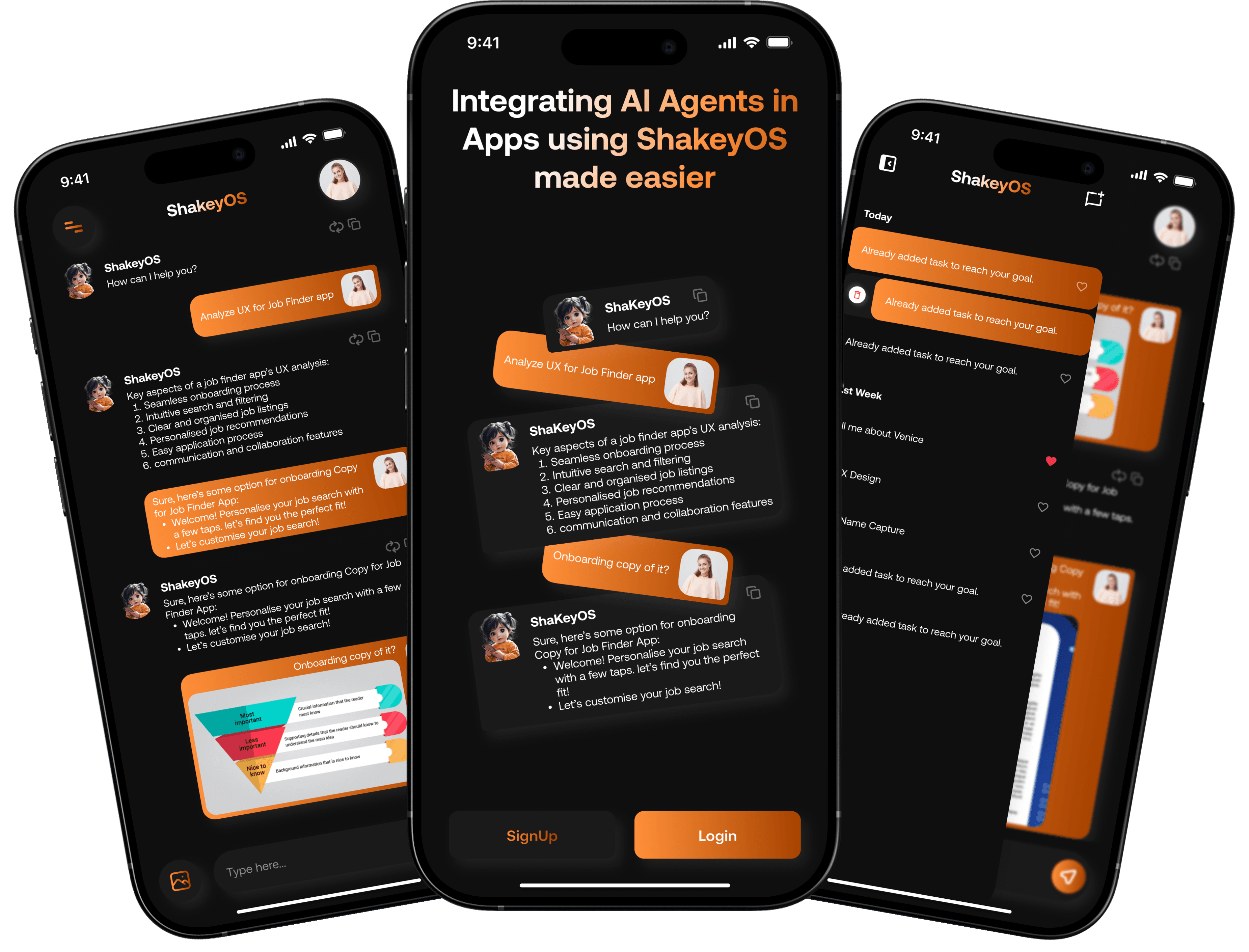
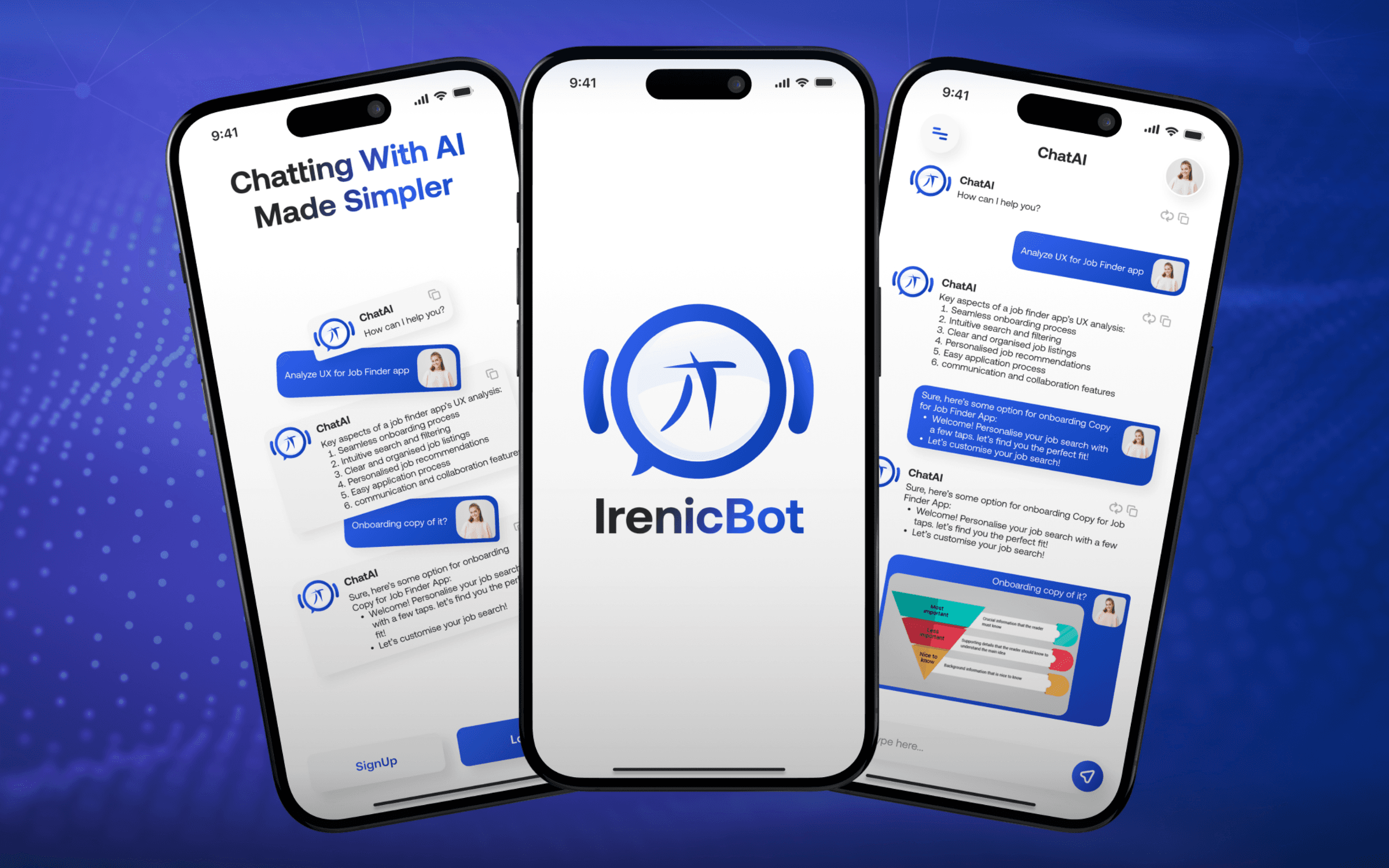
That means custom LLM products, AI agents, RAG applications, workflow automations, and MLOps infrastructure, all built on a multi-provider stack with eval-driven CI, cost-per-action SLOs, and tracing operators actually read. We have shipped this approach into our own products (IrenicBot, ShakeyOS) and into client engagements across healthcare, fintech, gaming, and SaaS.

The teams we work with do not want another AI demo. They want AI software that ships, evaluates, and stays shipped past the next model upgrade.

Productized engagements

Fixed-scope AI sprints. Buyable, not negotiable.

Time-boxed, fixed-price, eval-driven. Pick the shape that matches what you are scoping. Every sprint hands you the code, evals, and runbooks on day one.

  • For founders

    AI MVP Sprint

    From spec to working AI, fast.

    • Discovery + AI use-case validation
    • Eval harness wired in from sprint one
    • Investor-ready vertical slice
    Book a discovery call
  • For ops teams

    AI Automation Sprint

    Embed AI into the workflows your team runs every day.

    • Workflow audit of CRM, support, and ops tools
    • Custom agents on n8n, Make, or code
    • Production handover with tracing built in
    Book a discovery call
  • For existing AI

    AI Audit Sprint

    Eval-driven assessment of your live AI product.

    • Golden test set + eval harness build
    • Cost, latency, hallucination measurement
    • Sequenced production-readiness plan
    Book a discovery call

Our AI deliverables

  • AI agents

    Autonomous task-completion agents with tool use, multi-step reasoning, memory, and human-in-the-loop checkpoints where the stakes demand it.

  • RAG applications

    Retrieval-augmented Q&A and generation over your docs, codebase, support tickets, or product knowledge, with chunking, reranking, and citation-checking designed in.

  • Custom LLM products

    Chat-first products, copilots, and workflow assistants built on a multi-provider LLM stack with evaluation and observability from sprint one.

  • Chatbots & assistants

    Conversational AI with memory, multimodal input, saved threads, and the product-layer plumbing (auth, accounts, analytics) where the actual value lives.

  • Workflow automation

    n8n, Make, Zapier, or custom Python and TypeScript workflows that move AI decisions into the systems your team already uses: CRMs, ops tools, dashboards.

  • MLOps & eval infrastructure

    Eval suites tracked in CI, model registries, prompt versioning, tracing and observability, and the deploy pipeline that makes AI changes safe to ship.

  • AI dashboards & insights

    Natural-language data queries, automated cohort analysis, and AI-generated insights wired into the operational dashboards your team already opens.

  • AI integrations

    Embed AI features into existing products (CRM enrichment, ticket triage, document extraction, multimodal capture) through clean integration interfaces.

Bolted-on vs AI-native

Why most AI products break in production.

Two ways to ship AI. One holds up past the first model upgrade. The other does not.

The default pattern

Prompt-wrapper AI

A thin wrapper around one provider's API. Works in the demo, breaks at the first model upgrade, scale event, or cost spike.

  • One model hard-coded; switching providers means rewriting every prompt and integration.
  • Vibes-based testing; one engineer reads outputs over coffee and approves the change.
  • Cost-per-action unbounded; the first viral moment doubles the cloud bill before anyone notices.
  • Latency ignored until users complain; streaming added as a v2 feature.
  • Hallucinations detected by user complaints and screenshots dropped in Slack.
  • GPT-5 ships and the product behaviour drifts silently in production.
How we ship

IrenicTech AI-native

Model choice, evaluation, observability, and cost guards are first-class engineering decisions from sprint one. Not afterthoughts added before launch when the bill arrives.

  • Model choice is a first-class design decision with provider abstraction; swap per task on eval performance, cost, or latency.
  • Eval suites tracked in CI on every prompt or model change; regressions block deploy like failing tests do.
  • Cost-per-action tracked at p95 with budget alerts, request batching, and cheaper-model fallbacks for low-stakes turns.
  • Latency SLOs set in the discovery sprint; streaming, parallelisation, and prompt caching designed in from day one.
  • Hallucinations caught at evaluation gates with grounded-response scoring and retrieval citation checks.
  • Model upgrades run through the eval harness before rollout; behaviour change is measured, not surprising.

Where AI earns its place.

  1. 01 · Customer support

    AI triage + RAG over docs

    AI triages inbound tickets, retrieves the right knowledge-base passages, drafts a grounded reply, and routes long-tail cases to the human queue with context already attached.

  2. 02 · Sales

    Lead scoring + agent assist

    Scoring tuned to your funnel data, AI-drafted outbound personalisation, and in-call agent assist that surfaces relevant playbook snippets in real-time.

  3. 03 · Operations

    Document extraction + workflow automation

    Multimodal extraction of structured data from invoices, contracts, scanned forms, and PDFs, straight into the system of record with confidence scores and human-review queues for low-confidence rows.

  4. 04 · Engineering

    Code, test, and refactor at codebase pattern

    Code generation tuned to your codebase conventions, test generation against your existing patterns, and AI-assisted refactor or migration work scoped to a sprint, not a quarter.

  5. 05 · Content & creative

    Multimodal capture and summarisation

    Voice transcription, meeting summarisation, action-item extraction, and multimodal capture (image + speech) wired into the workflow tools your team already uses.

  6. 06 · Analytics

    Natural-language data queries

    Ask your data in plain language. Schema-aware query generation, automated cohort analysis, and AI-generated insight cards wired into the existing operational dashboards.

Voice of the customer

From founders and CTOs shipping AI in production.

  • Three months of demos that never made it past the prototype review. The first IrenicTech build is in production today, with eval coverage on every prompt and a cost ceiling per tenant that we actually trust.

    Sara Lindgren

    Founder, Coppice

  • The evaluation harness alone was worth the engagement. We ship LLM prompt changes the same way we ship code: PR, test, deploy. Three model swaps later, the quality bar has only moved up.

    Arjun Mehta

    CTO, Foxhill Insurance

  • We own the prompts, the evals, the routing logic, and the cost dashboards. When the new model landed, our team did the swap in an afternoon. No agency dependency.

    Elena Rossi

    Head of Product, Northwall

How we ship AI products.

Six steps from first call to a live AI product. The discovery sprint validates the use case before any production code ships; the eval harness gates every change after.

  1. 01

    Discovery sprint

    AI use-case validation, model selection workshop, eval-set design, cost and latency budgeting. We leave with a one-page brief and a vertical-slice scope. No production code yet.

  2. 02

    Eval harness

    Define what 'better' means before we build. Golden test set, scoring rubric, regression suite. The eval harness gates every model or prompt change for the rest of the engagement.

  3. 03

    Vertical slice

    Working prototype of the core AI loop (agent, RAG retrieval, or chat surface) with the eval harness already wired in. Investor-ready, not a tech demo.

  4. 04

    Production infrastructure

    Cost guards, latency SLOs, provider abstraction, model versioning, tracing and observability, PII redaction, audit trail. The plumbing that makes AI safe to ship and safe to upgrade.

  5. 05

    Launch

    Production deploy with monitoring, on-call runbook, model fingerprints captured in the build artifact, and the rollout plan for the next model upgrade already documented.

  6. 06

    Continuous improvement

    Eval-driven iteration, weekly outlier review, quarterly model and prompt portfolio refresh, and the cost / quality / latency dashboards your operators actually open every Monday.

AI safety + compliance, built in.

EU AI Act, GDPR, CCPA, SOC 2 with model-governance extensions, NIST AI RMF alignment, model and system cards, PII redaction, and adversarial red-teaming built into the architecture. Not added before a regulator letter or a press cycle.

BAA / DPA available on request. We carry our own agreements and sign yours.

Common questions, answered.

  • Which LLM providers do you use?

    All the serious ones: OpenAI, Anthropic, Google (Gemini), Mistral, and self-hosted Llama. Provider choice is a per-task design decision driven by evals, cost, and latency, not a default. We architect for provider switching from sprint one.

  • How do you handle hallucinations?

    Three things in combination. Grounded-response scoring in the eval harness (does the answer cite retrieved evidence?). Retrieval architecture tuned to your domain (chunking, reranking, citation checks). And weekly outlier review queues so the patterns get caught and fed back into evals, not just escalated.

  • How do you measure whether the AI is getting better?

    Eval harness in CI. Golden test sets with scoring rubrics for the dimensions you care about (factuality, grounded-response, helpfulness, format adherence, safety). Every prompt or model change runs through it before deploy. Regressions block the rollout the same way failing tests block a code deploy.

  • OpenAI or open-source models: which should we use?

    Depends on what the task needs. Frontier models for hard reasoning and multimodal; cheaper hosted models for high-volume turns; self-hosted open-source where data residency, cost, or fine-tuning matter. The eval harness picks the answer; we just build the architecture that makes the choice cheap to change.

  • How do you handle data privacy?

    PII detection and redaction at the request boundary so logs and traces stay safe. Encrypted storage of conversation history. Configurable retention windows. Provider data-processing agreements reviewed before we ship. EU data-residency provider options where the engagement needs them.

  • Do you help with EU AI Act compliance?

    Yes. Risk-tier classification, transparency obligations, model registration where required, and the documentation trail the Act expects. We do not give legal advice; we build to a counsel-reviewed brief and assemble the engineering evidence the Act requires.

  • What does a typical AI engagement timeline look like?

    AI audit: two to three weeks. AI sprint: four to eight weeks. Discovery sprint plus vertical slice: six to ten weeks. Production-grade build to launch: three to nine months depending on scope. Continuous improvement: ongoing eval-driven iteration after launch.

  • How is pricing structured?

    Fixed-scope for AI audits, discovery, and sprints. Monthly retainer for dedicated team during production builds. Per-feature pricing available for clearly bounded AI integrations into existing products. Cost-per-action benchmarking included in every engagement so you can plan against a real number.

Start a conversation

Tell us what you’re building.

Share the essentials and we’ll reply within 4 hours with a real next step, not an auto-responder.

What happens next

  1. We reply within 4 hours, from a real person, not an auto-responder.
  2. A short scoping call to understand the goal, constraints, and timeline.
  3. A fixed-scope discovery sprint: a working prototype and a written estimate.
Office
Austin, TX, United States
Hours
Mon–Fri · Async + scheduled calls

Fields marked are required.