
Blockchain development services.
Engineered for audits and real users.

Blockchain development services by IrenicTech: audited smart contracts, wallet integration, dApp frontends, and on-chain infrastructure engineered for real users, not token theater
  • React
  • Flutter
  • Swift
  • Kotlin
  • Next.js
  • TypeScript
  • Node.js
  • Tailwind CSS
  • Express
  • PostgreSQL
  • MongoDB
  • Redis
  • OpenAI
  • Anthropic
  • Hugging Face
  • LangChain
  • PyTorch
  • TensorFlow
  • AWS
  • Google Cloud
  • Microsoft Azure
  • Vercel
  • Cloudflare
  • Docker

IrenicTech blockchain engineering at a glance

Blockchain development as an engineering discipline. Built to be audited, not hyped.

Most blockchain work shipping today is a forked contract, an unaudited deploy, and a press release. Works for the token launch. Drains tens of millions when the first exploit lands and the post-mortem reads like every other one before it.

We build blockchain development services as a real engineering discipline. Contracts audited before mainnet. Wallet integration tested with real funds on testnet. On-ramps and off-ramps regulated where the jurisdiction demands it. Tokenomics modeled, not just minted.

The teams we work with do not want another rug-pulled launch with their name on it. They want a blockchain product their users trust, that survives a third-party audit and a Reddit thread.

Productized engagements

Fixed-scope blockchain sprints. Buyable, not negotiable.

Time-boxed, fixed-price, with a deliverable that lands on testnet (or audit-prep) at the end of the sprint. Pick the shape that matches what you are scoping. Every sprint hands you the contracts, the tests, and the deploy pipeline on day one.

  • For founders

    Smart Contract MVP Sprint

    From spec to audit-ready contracts on testnet in six weeks.

    • Solidity contracts on top of OpenZeppelin's audited primitives
    • Threat model, invariant tests, and fuzz suite written alongside the code
    • Testnet deployment with a dApp frontend wired to WalletConnect on day one
    Book a discovery call
  • For existing products

    Wallet Integration Sprint

    WalletConnect, custody APIs, and on/off-ramps in four weeks.

    • WalletConnect v2, AppKit, and the wallet UX patterns users expect today
    • Custody integration via Fireblocks, Privy, or Magic, picked per the regulatory shape
    • On-ramp and off-ramp via licensed providers, with the KYC flow your jurisdiction needs
    Book a discovery call
  • For DeFi teams

    Protocol Hardening Sprint

    Audit prep, formal verification, and gas optimization before mainnet.

    • Audit-firm-ready documentation, threat model, and known-issues log
    • Foundry invariant tests and selective formal verification on the critical paths
    • Gas profiling and storage-layout review for the deploy-time cost ceiling
    Book a discovery call

Our blockchain deliverables

  • Smart contracts

    Solidity, Vyper, or Rust (for Solana) built on top of audited primitives like OpenZeppelin. Invariant tests, fuzz suite, and threat model written alongside the code, not after.

  • Wallet integration

    WalletConnect v2 and AppKit, custody integration via Fireblocks, Privy, or Magic where it fits. Tested wallet UX patterns: connect, sign, switch chain, sponsored gas, account abstraction.

  • Decentralized storage

    IPFS via Pinata or Helia, Arweave for permanence, content-addressed metadata with the pinning strategy that keeps your NFTs from going dead in two years.

  • dApp frontends

    React with ethers.js, viem, or @solana/web3.js. Type-safe contract bindings, transaction state UX that handles every failure mode, and the wallet UX a non-crypto user can actually follow.

  • Oracle integration

    Chainlink price feeds, Pyth network, Switchboard, or custom oracles when the data source is bespoke. Manipulation-resistance designed in, not assumed.

  • Multi-chain support

    EVM (Ethereum, Polygon, Base, Arbitrum, Optimism), Solana, or Cosmos. Chain-agnostic where it can be, chain-specific where the platform matters. Multi-chain only when the use case earns it.

  • Audit preparation

    Audit-firm-ready documentation, known-issues log, threat model, and the test-coverage report a Trail of Bits or OpenZeppelin engagement expects on day one. Remediation cycle built into the timeline.

  • Tokenomics & governance

    Token supply schedule, distribution model, vesting and lockup contracts, governance framework (multisig, timelock, on-chain voting). Modeled in a spreadsheet before it is minted on-chain.

Hype-led vs engineered blockchain

Why most blockchain launches end as cautionary tweet threads.

Two ways to ship a blockchain product. One survives the first audit, the first exploit attempt, and the first regulator letter. The other does not.

The default pattern

Hype-led blockchain

A forked contract, an unaudited deploy, a press release, and a launch week of Discord moderation. Ships fast, becomes a cautionary thread.

  • Contracts forked from a tutorial, deployed unaudited, marketed as 'novel' before the first transaction.
  • Wallet integration tested with one wallet on one network; breaks on every other configuration in production.
  • Tokenomics drafted in a Discord thread, minted on mainnet, regretted by month three.
  • Storage 'decentralized' by uploading once to IPFS and never pinning again; metadata goes dead in eighteen months.
  • Marketing-led roadmap: airdrop, then NFT collection, then governance launch, then the team disappears.
  • Post-launch monitoring is 'check the explorer'; first exploit hits production before anyone notices.

How we ship

IrenicTech engineered blockchain

Contracts on audited primitives, invariant-tested, audit-prepared, monitored. Tokenomics modeled before mint. Roadmap engineering-led, not Discord-led.

  • Contracts built on top of audited primitives (OpenZeppelin, Solady), invariant-tested with Foundry, fuzz-tested before audit.
  • Wallet integration tested across the matrix that matters: top wallets, top chains, hardware signers, account abstraction.
  • Tokenomics modeled in a spreadsheet, reviewed by counsel where it touches securities law, before any token is minted.
  • Decentralized storage with pinning strategy designed in: pinning service contracts, redundancy, and migration paths documented.
  • Engineering-led roadmap: spec, audit, mainnet, monitoring, support. The token (if there is one) ships when the product is ready, not before.
  • Monitoring designed in: on-chain event indexing, alerting on anomalous transactions, incident response runbook for the first exploit attempt.

Where blockchain earns its place.

  1. 01 · Real-world assets

    Tokenized real-world assets

    On-chain representation of off-chain value: real estate, invoices, commodities, carbon credits. The hard work is the off-chain custody, oracle, and legal wrapper; the on-chain part is the easy half.

  2. 02 · Fintech

    Wallet & custody for fintech

    Embedded wallets, MPC custody, fiat on-ramps and off-ramps for a fintech app that needs to touch crypto without becoming a crypto exchange. Regulated where the jurisdiction demands it.

    See our SaaS Platforms practice
  3. 03 · Payments

    On-chain B2B and cross-border payments

    Stablecoin rails for cross-border B2B payments, with the compliance plumbing (Travel Rule, screening, reporting) the regulator expects and the user experience that does not feel like a hostage situation.

  4. 04 · Utility NFTs

    NFTs that actually do something

    Event tickets, access passes, certificates, in-game items, supply-chain provenance. NFTs as the underlying primitive for utility, not the speculative top of the funnel.

  5. 05 · DeFi

    Serious DeFi protocols

    Lending markets, DEXes, staking, liquid restaking. The protocols where security and audit posture are the product. Foundry invariant tests, selective formal verification, gas-optimized deploy.

    See our DevOps practice
  6. 06 · Internal blockchain

    Provenance & supply-chain ledger

    Permissioned or public chain used as an immutable audit log for supply chain, document provenance, or regulatory reporting. The blockchain is the boring middle, not the marketing top.

Spotlight case study

Puchooo
A gateway to crypto, built for traders and newcomers alike.

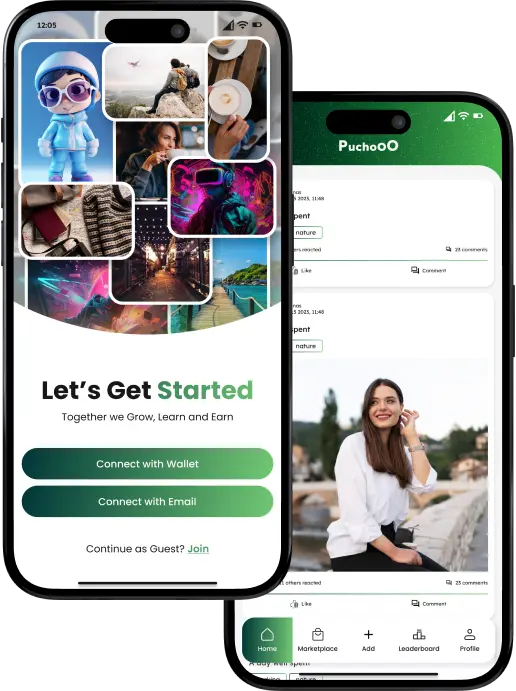
A cryptocurrency and blockchain platform built as a gateway to digital assets: WalletConnect for connecting any wallet, IPFS-backed metadata via Pinata, GraphQL on Apollo for portfolio and trading flows. Designed to serve seasoned crypto users and first-timers from the same interface.

  • Wallet bridge

    WalletConnect

  • API layer

    Apollo GraphQL

  • Metadata storage

    IPFS via Pinata

Puchooo cryptocurrency and blockchain platform by IrenicTech: full feature overview with WalletConnect integration, IPFS metadata via Pinata, and Apollo GraphQL trading flows

Voice of the customer

From founders shipping blockchain products that are audited and live.

  • Contracts went into audit and came back with one informational finding. The remediation cycle that usually takes three weeks took four days. The audit firm asked us who wrote the test suite.

    Devansh Shroff

    Founder, Greylock Protocol

  • Wallet integration that actually worked across the seventeen wallet configurations our users brought us. Connect success rate moved from sixty percent to ninety-six in the first release.

    Inès Lefèvre

    CTO, Coppice Pay

  • They talked us out of launching a token. Three months later the equivalent project that did launch a token is in regulatory trouble. The protocol we shipped instead is live, audited, and used.

    Mateo Rivas

    Co-founder, Tidewater Markets

How we ship blockchain products.

Six steps from first call to a monitored mainnet deployment. The audit-prep gate is non-negotiable; the mainnet launch never happens before the audit-corrected build is in our hands.

  1. 01

    Discovery & on-chain architecture

    Use-case validation (does this need a blockchain at all), chain selection, threat model, regulatory shape, audit-firm shortlist. One-page brief, no production code yet.

  2. 02

    Contract design & threat model

    Contract architecture on audited primitives, invariants and access control written before any logic. Threat model documents the attacks we are defending against.

  3. 03

    Testnet + dApp integration

    Contracts deployed to testnet, dApp wired to WalletConnect, fuzz and invariant tests in CI. Real-fund testnet rehearsal with the wallet UX patterns shipped.

  4. 04

    Audit prep & remediation

    Audit-firm-ready documentation, known-issues log, test-coverage report. We engage the audit firm with you, run the remediation cycle, and ship the audit-corrected contracts.

  5. 05

    Mainnet launch

    Mainnet deploy via tested deploy script, multisig admin from day one, timelock on privileged functions, incident response runbook for the first exploit attempt.

  6. 06

    Monitoring & response

    On-chain event indexing, anomaly alerting, transaction monitoring, and the incident response retainer for the post-launch operational risk that blockchain products carry.

Blockchain security, compliance, and interoperability, built in.

The frameworks we measure ourselves against, and the ones we engineer into the contracts we hand off. Designed in from sprint one, not retrofitted before the first audit.

Pre-audit reviews and tokenomics modeling available as standalone engagements. Bring your draft, leave with a prioritised remediation backlog and a known-issues log.

Common questions, answered.

  • How long does a blockchain project take?

    Smart Contract MVP Sprint: six weeks to audit-ready contracts on testnet. Audit cycle: three to six weeks depending on contract complexity and the audit firm's queue. Mainnet launch: eight to sixteen weeks total from first call. Ongoing: monitoring and incident response retainer for the post-launch operational risk.

  • What does a blockchain project cost?

    Price varies with the scope of the work. The productized sprints are fixed-price for the scope they cover. A full blockchain product is quoted after the discovery call, with the number driven by contract complexity, audit firm choice, wallet and chain matrix, regulatory shape, and the ongoing monitoring commitment. The discovery call itself is free; you accept the estimate or you do not.

  • Which chains do you build on?

    EVM chains by default (Ethereum, Polygon, Base, Arbitrum, Optimism) because the tooling, audit pool, and wallet ecosystem are the deepest. Solana when the use case rewards parallel execution or the team is already in the Solana ecosystem. Cosmos for app-chain economics. Multi-chain only when the product genuinely benefits, not for the marketing copy.

  • Do you build NFT marketplaces and tokenize real-world assets?

    Yes, both. NFT marketplaces (minting, marketplace contracts, royalty flows, IPFS-pinned metadata, the wallet UX a non-crypto user can follow) and real-world-asset tokenization (off-chain custody, oracle integration, legal wrapper, on-chain representation) are within scope. The harder half in either case is off-chain (custody, legal, oracle reliability); the on-chain part is where audited primitives do most of the work.

  • Do you handle smart contract audits?

    We prepare for and run the audit cycle. We do not market ourselves as an audit firm because we are not an independent third party for our own work. We engage Trail of Bits, OpenZeppelin, Halborn, ChainSecurity, or Spearbit based on the contract shape and the audit-firm queue, run the remediation cycle, and ship the audit-corrected build to mainnet.

  • What is your stance on Web3 and crypto hype?

    Skeptical. Most blockchain projects do not need a blockchain. The ones that do, deserve serious engineering. We will tell you in the discovery call if the use case does not earn the on-chain component; that conversation has saved more than one team from a year of regret.

  • Solidity, Vyper, or Rust?

    Solidity by default on EVM (deepest tooling, biggest audit pool, most reference contracts). Vyper for contracts where the readability and security guarantees justify the smaller ecosystem. Rust for Solana, Cosmos, or any non-EVM chain. The discovery call picks the language based on the chain and the team.

  • How do you handle wallet integration and custody?

    WalletConnect v2 and AppKit as the default wallet bridge. Custody via Fireblocks, Privy, Magic, or self-custody patterns picked per the regulatory shape and user UX. Tested across the wallet matrix that matters, including hardware signers and account abstraction. Connect-success rate measured in production.

  • Do you offer ongoing maintenance and incident response after mainnet?

    Yes. Post-launch retainers cover on-chain event monitoring, anomaly alerting, contract upgrade cycles (where the contracts are upgradeable), and the incident response runbook for the first exploit attempt. Mainnet launch is not the end of the engagement; it starts the operational phase where most real-world risk lives.

  • Who owns the contracts, the keys, and the deploy pipeline?

    You. From day one. Contracts in your GitHub organisation, deploy keys in your secret manager (or hardware wallet), multisig admin set up with your signers. We push to your repos, sign with your keys, and document everything in your wiki. No proprietary platform you cannot leave; no ongoing dependency on us unless you want one.

Start a conversation

Tell us what you’re building.

Share the essentials and we’ll reply within 4 hours with a real next step, not an auto-responder.

What happens next

  1. We reply within 4 hours, from a real person, not an auto-responder.
  2. A short scoping call to understand the goal, constraints, and timeline.
  3. A fixed-scope discovery sprint: a working prototype and a written estimate.
Office
Austin, TX, United States
Hours
Mon–Fri · Async + scheduled calls

Fields marked are required.